Health stories / Body basics
How do fats travel in the blood? Meet their transporters
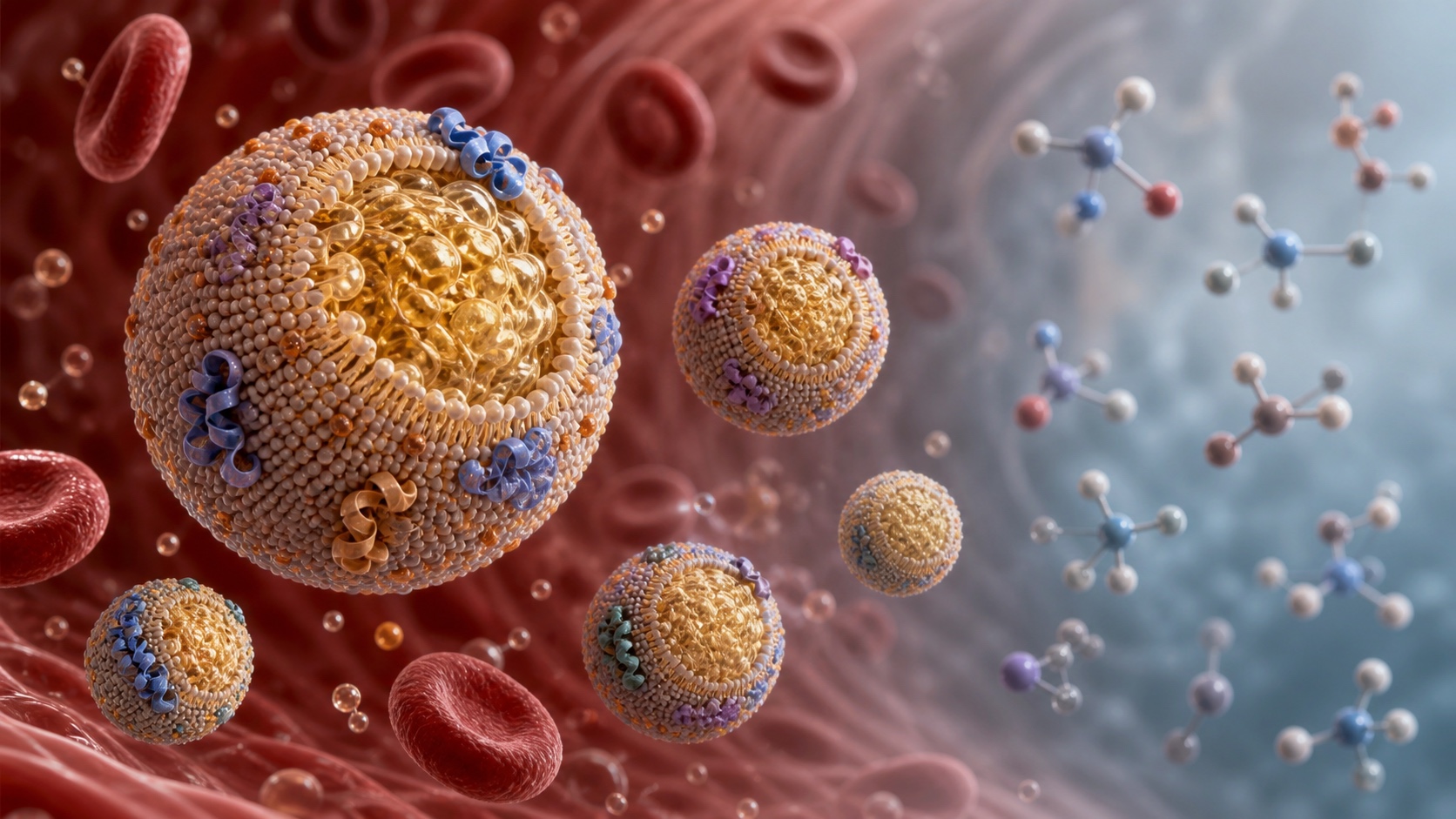
Fat travels like cargo in a delivery vehicle.
Fats and fat-like substances are collectively called lipids. Some travel through the blood in transport particles called lipoproteins. Think of a delivery vehicle: lipids are the cargo, and dedicated proteins called apolipoproteins form part of the vehicle.
Dietary protein takes a different route. It is digested into small building blocks called amino acids and short chains called peptides. Apolipoproteins, by contrast, are dedicated proteins made by cells for their particular roles.
- Dietary protein: a nutrient that must be digested
- Apolipoproteins: specialised proteins made by cells
- Lipoproteins: particles combining lipids and apolipoproteins
- Both names include protein, but their origins and functions differ.
References: National Institute of Diabetes and Digestive and Kidney Diseases · MDText.com, Inc. · National Academies Press (US)
The same meal, different starting pathways
After a meal, protein is broken into smaller units, while lipids follow their own digestion and absorption pathways. They leave the starting point through different processes.
After absorption, intestinal cells package some lipids with a structural protein called apoB-48 and other components. This forms transport particles called chylomicrons, which then enter the circulation.
- Dietary protein undergoes digestion.
- Lipids follow their own digestive pathway
- Intestinal cells assemble particles.
- Assembled particles then enter circulation
Review digestion at What is protein? then distinguish that step from lipid particle assembly
References: National Institute of Diabetes and Digestive and Kidney Diseases · Springer · MDText.com, Inc.
Different carriers collect cargo from different places
Chylomicrons are particles assembled in intestinal cells, with the protein apoB-48 as an important structural component. They carry lipids from food after absorption.
The liver makes its own lipid transport particles, called VLDL. They carry a type of fat called triglycerides from the liver into the blood, with the protein apoB-100 forming their main structural framework.
As VLDL releases triglycerides, the particles change and may become LDL. HDL is another group of transport particles, with different components, origins and routes.
- Chylomicrons are assembled in intestinal cells
- VLDL is assembled in the liver
- LDL forms as particles change along their pathway
- HDL has a different composition and pathway
References: Springer · MDText.com, Inc.
Different parts of the vehicle have different roles
Proteins in the apoB group are like the vehicle’s frame, staying with a particle throughout its journey. Some other apolipoproteins can move between particles.
Some proteins on lipid transport particles help enzymes work. Others bind to receptors on cells to help deliver their cargo. Their roles depend on the protein type and the stage of the process.
Some free fatty acids travel through the liquid part of blood attached to a protein called albumin. The delivery-vehicle picture therefore explains some fat-transport routes, but not all of them.
- Different types of lipid may use different transport routes.
- There are several groups of lipoprotein particles
- Proteins on lipid transport particles have different roles from albumin, which carries some fatty acids.
- Saying protein carries fat is a simplified picture of certain pathways.
Both apolipoproteins and albumin are made by the body. Dietary proteins are digested before entering the body's amino acid pool.
References: MDText.com, Inc. · Springer · National Academies Press (US) · National Institute of Diabetes and Digestive and Kidney Diseases
When the carrier reaches a cell, the work continues
When certain lipoproteins reach a cell, receptors help the cell take up their lipids. This delivers raw materials to their destination.
Once inside, the cell sorts, moves and processes the lipids for particular uses, such as making hormones or cell membranes. Each use involves its own steps.
Read more at What hormones are made from and What makes up a cell membrane
- Assembling the particle is the start of its journey.
- Dietary protein and proteins made by cells have different origins.
- Lipids have further steps after entering a cell
- Each destination uses its own mechanism.
References: MDText.com, Inc. · Springer · National Institute of Diabetes and Digestive and Kidney Diseases
See the pathway, understand the role
Put simply, the body makes specific proteins and combines them with lipids to form particles for transport in the blood.
Dietary protein is material that undergoes digestion. Blood particles are systems assembled by cells. These are different stages in the same story.
- Dietary protein differs from apolipoproteins.
- Chylomicrons, VLDL, LDL and HDL are different groups of transport particles
- Free fatty acids may travel attached to the protein albumin
- Making hormones or membranes also requires specific processes inside the cell.
- This article explains lipid transport in the body. Effects of a particular food or product require evidence about that food or product.
Interested in GENISÉ products? Explore Avocado Plus and Pro Cap on their individual product pages and choose your preferred pack.
References: MDText.com, Inc. · Springer · National Academies Press (US) · National Institute of Diabetes and Digestive and Kidney Diseases
Frequently asked questions
- Are lipoproteins proteins or fats?
- It is a transport particle made from fats or fat-like substances together with dedicated proteins produced by cells. Think of a delivery vehicle with both a frame and cargo.
- Does eating protein with fat turn it immediately into lipoproteins?
- Dietary protein must be digested first. Intestinal cells separately combine some lipids with the protein apoB-48 and other components to form transport particles called chylomicrons. These are different steps.
- Does adding protein improve fat transport?
- This system also depends on the particle types, dedicated proteins made by cells, enzymes and receiving sites on cells. The amount of dietary protein alone cannot tell us whether fat transport will work better.