Health stories / Fibre
Two types of fibre: choosing for balanced meals
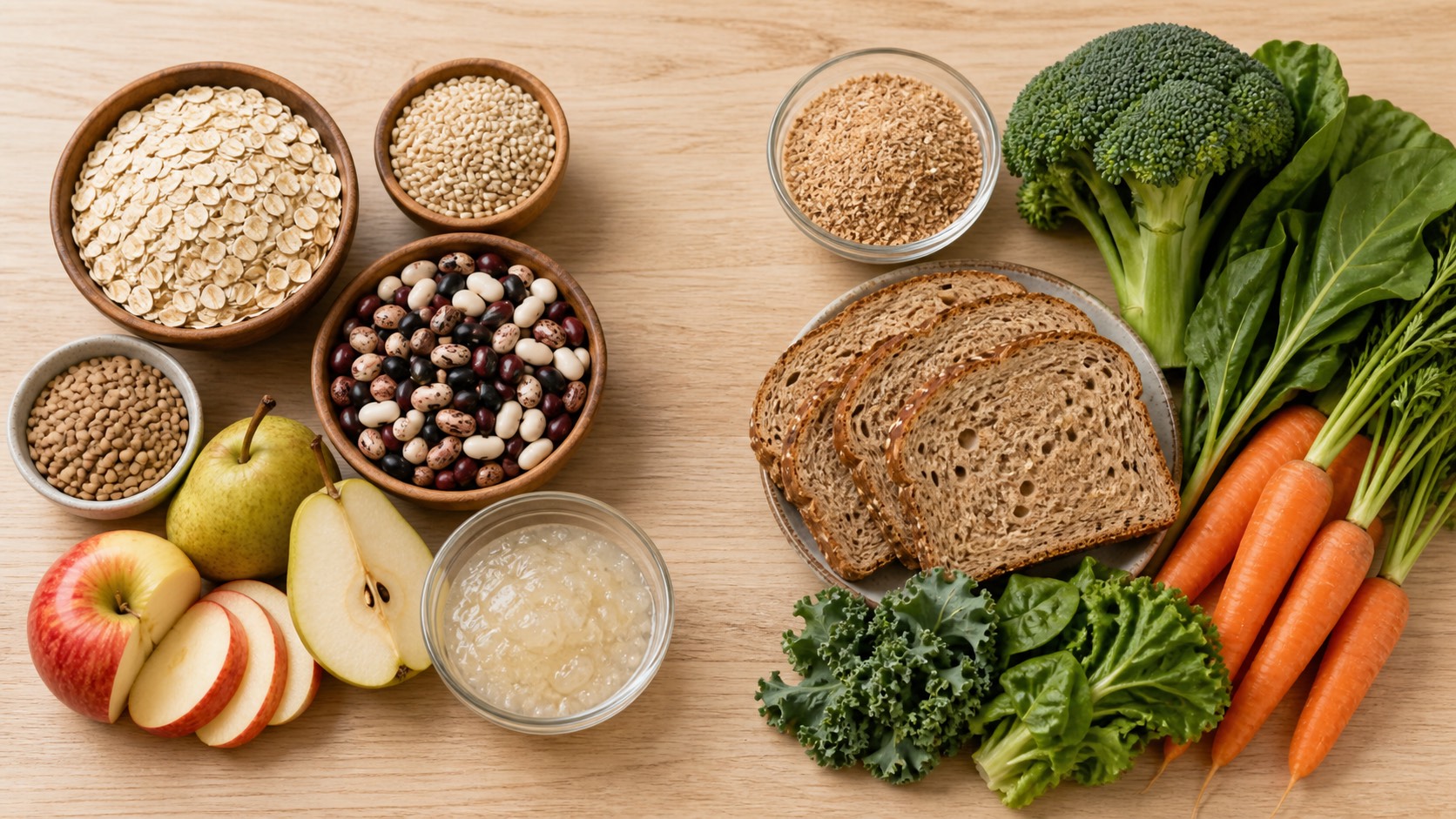
Meet two types of fibre by seeing how they behave in water
The clearest comparison starts with water: soluble fibre forms a thick, gel-like substance, while insoluble fibre largely retains its shape.
Dietary fibre is a type of carbohydrate. The U.S. Food and Drug Administration (FDA) describes soluble and insoluble groups to make this difference easier to understand.
- Soluble: dissolves in water and forms a gel-like substance
- Insoluble: does not dissolve in water
- Insoluble fibre may pass through the digestive tract largely intact.
- These two group names describe fibre characteristics.
This illustration encourages a more varied diet: different foods can provide different types of fibre, and both can be part of everyday meals.
References: U.S. Food and Drug Administration
The gel-forming group
MedlinePlus lists soluble fibre sources including oat bran, barley, nuts, seeds, dried beans, lentils and peas.
Certain vegetables and fruits also appear in the examples. Looking at individual foods is clearer than assuming every food in a broad group provides the same fibre type.
- Oat bran and barley
- Nuts and seeds
- Dried beans, lentils and peas
- Certain vegetables and fruits
Use this list for meal ideas, rotating grains, beans, seeds, vegetables and fruit to suit your routine.
References: A.D.A.M. content hosted in MedlinePlus Medical Encyclopedia, U.S. National Library of Medicine
The group that largely keeps its structure
MedlinePlus examples of insoluble fibre sources include wheat bran, vegetables and whole grains.
Comparing the two lists shows that fibre comes from many food groups. Alternating sources helps make meals more varied.
- Start with the foods you actually eat
- Check which example group the food belongs to.
- One food can contain more than one type
- Use this list to help vary your food choices from day to day.
If you are exploring different plant food groups, read How plant and animal proteins differ separating protein from fibre
References: A.D.A.M. content hosted in MedlinePlus Medical Encyclopedia, U.S. National Library of Medicine
Varied meals help cover your needs
Fibre is found in several food groups, including whole grains, dried beans, fruit, vegetables, nuts and seeds, as illustrated by the nutrition sources cited here.
You do not need to pick one type as the better choice. Look at your whole day: how much variety comes from grains, beans, vegetables, fruit, nuts and seeds?
- Review the whole day's food.
- Vary grains, beans, vegetables, fruit and seeds according to the foods you can eat.
- Use the differences between the two types to help you choose a variety of foods
- Read product information on that item's label
Explore the overall meal at How fat and protein work together and include fibre as another part of dietary variety
References: MedlinePlus, U.S. National Library of Medicine · National Institute of Diabetes and Digestive and Kidney Diseases, NIH · U.S. Food and Drug Administration
Increase fibre gradually to suit your meals.
Increasing fibre too quickly may cause gas, bloating or cramps. The sources therefore recommend increasing it gradually.
People with digestive symptoms or dietary restrictions should consult a healthcare provider before making large increases, so the plan suits them.
- Identify the type of fibre supplied by the food you are adding
- Increase gradually.
- Watch for gas, bloating or cramps
- Rotate food sources to fit everyday meals
Start increasing fibre through everyday food choices. For GENISÉ products, explore Avocado Plus and Pro Cap separately according to your interests.
References: MedlinePlus, U.S. National Library of Medicine · National Institute of Diabetes and Digestive and Kidney Diseases, NIH
Frequently asked questions
- How do soluble and insoluble fibre differ?
- Soluble fibre dissolves in water and forms a thick, gel-like substance. Insoluble fibre does not dissolve in water and may pass through the digestive tract largely intact.
- Should I choose only one type of fibre?
- Aim for a variety of foods across the day, including sources of both soluble and insoluble fibre, rather than choosing just one type.
- Can I increase fibre very quickly?
- Increasing it too quickly may cause gas, bloating or cramps. Increase gradually, and consult your healthcare provider if you have symptoms or specific restrictions.
References
- U.S. Food and Drug Administration — Interactive Nutrition Facts Label — Dietary Fiber
- MedlinePlus, U.S. National Library of Medicine — Dietary Fiber
- A.D.A.M. content hosted in MedlinePlus Medical Encyclopedia, U.S. National Library of Medicine — Soluble vs. insoluble fiber
- National Institute of Diabetes and Digestive and Kidney Diseases, NIH — Eating, Diet, & Nutrition for Constipation