Health stories / Protein
How much protein do you need each day? Calculating from body weight
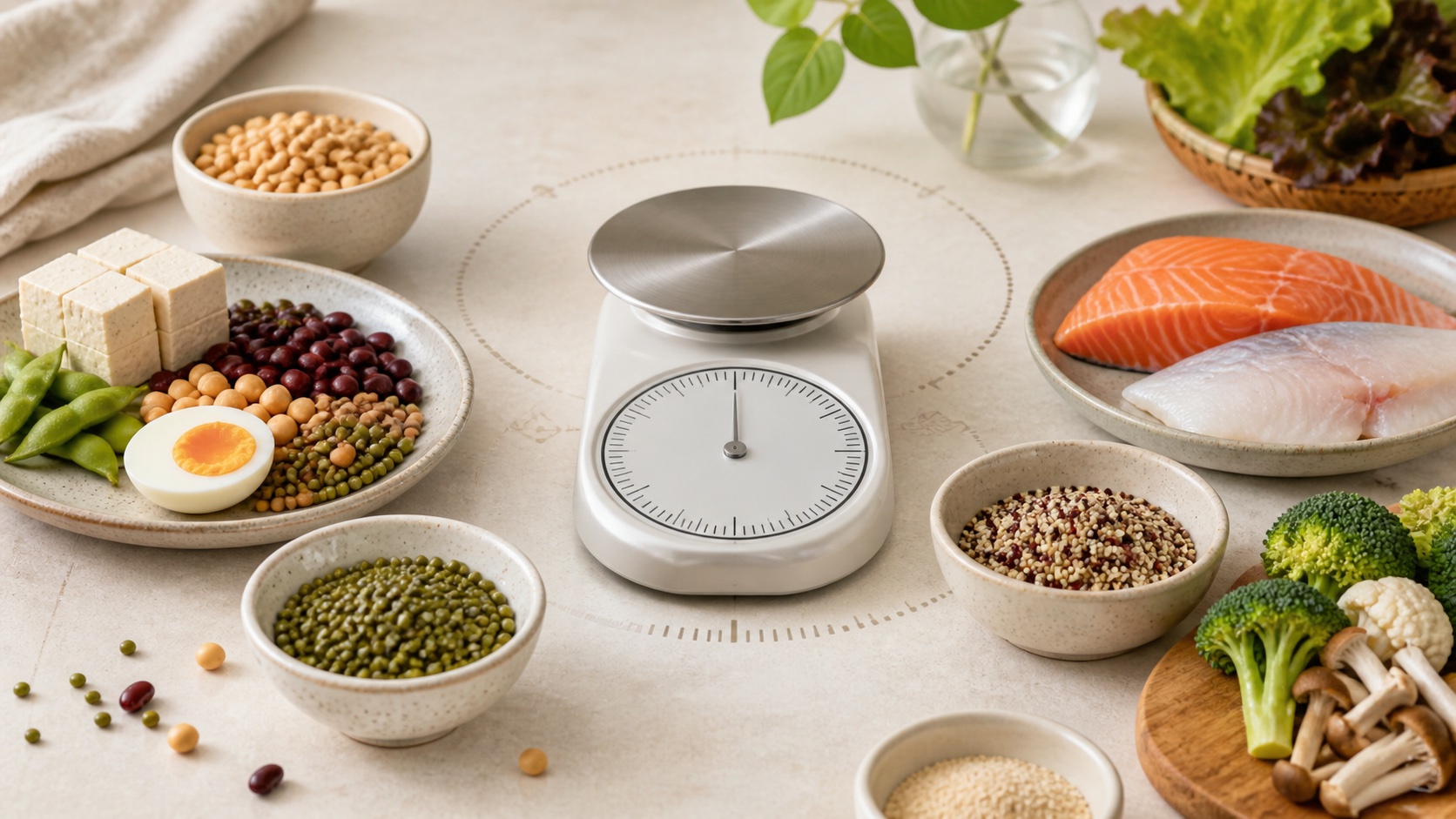
Start with the adult reference intake
The European Food Safety Authority (EFSA) sets a population reference intake for adults, including older adults, of 0.83 grams of protein per kilogram of body weight per day.
Use this value as a starting point for understanding protein intake. The amount suited to each person also depends on their overall diet and health.
- Weigh yourself in kilograms before calculating.
- Use 0.83 grams per kilogram of body weight as the adult reference value.
- Use this as a starting point; your individual needs also depend on your health and diet.
References: EFSA: protein reference intake
Try calculating for a body weight of 60 kilograms
For example, 60 kilograms multiplied by the reference value of 0.83 grams per kilogram gives approximately 50 grams per day.
This example shows how to calculate the reference amount. You can then choose foods by looking at the protein they provide and considering your health and lifestyle.
- Multiply by the reference value of 0.83 grams per kilogram.
- The rounded result is approximately 50 grams per day.
- Compare this with the protein you get from food, taking your age, activity and health into account.
References: EFSA: protein reference intake
Guidance for adults over 65
The PROT-AGE group’s guidance on protein for older adults proposes 1.0–1.2 grams per kilogram of body weight per day for people over 65.
The same document proposes at least 1.2 grams per kilogram for physically active older adults. This is not a recommendation for everyone aged 40–50.
- This PROT-AGE guidance applies to adults over 65.
- Adults over 65: use the general range above as a guide.
- Older adults who exercise: consider the separate recommendation for this group.
- The amounts recommended for older adults may not suit other age groups.
References: PROT-AGE: protein in older adults
Kidney disease requires individual guidance
PROT-AGE notes that older adults with severe kidney disease who are not receiving dialysis may need to restrict protein, so they should not increase intake on their own using general formulas.
Ask your doctor or care team to help determine the right amount for you, as protein needs also depend on your health.
- Ask your doctor about the severity of your kidney disease.
- Older adults with severe kidney disease who are not on dialysis may need to limit protein.
- Do not adjust protein intake yourself using general reference values
- Seek advice from a doctor or care professional who knows your medical history.
References: PROT-AGE: protein in older adults
Turn the numbers into a meal plan.
Read What is protein? to explore food sources, then use the reference amount to help plan your total daily protein intake.
Read more about Muscle and ageing to help plan meals for your life stage. If you are interested in Pro Cap, visit the product page for its format and directions.
- Choose the reference amount for your age group.
- Use your weight in kilograms for the calculation.
- Consider whether that amount suits your exercise routine and health.
- Use the calculation as a starting point, then add up the protein in the foods you actually eat.
References: EFSA: protein reference intake · PROT-AGE: protein in older adults
Frequently asked questions
- What is the protein reference intake for adults?
- The European Food Safety Authority (EFSA) gives a population reference intake for adults, including older adults, of 0.83 grams per kilogram of body weight per day. The amount suited to each person also depends on their health and overall diet.
- What is the calculation for a person weighing 60 kilograms?
- Multiplying 60 by the reference value of 0.83 gives about 50 grams per day. This illustrates the calculation; it is not a target for everyone.
- Can people with kidney disease use the general reference value?
- PROT-AGE notes that older adults with severe kidney disease who are not receiving dialysis may need to restrict protein. Individual guidance from a healthcare professional is appropriate.