Health stories / Plant protein
Choosing a better protein balance: what is a limiting amino acid?
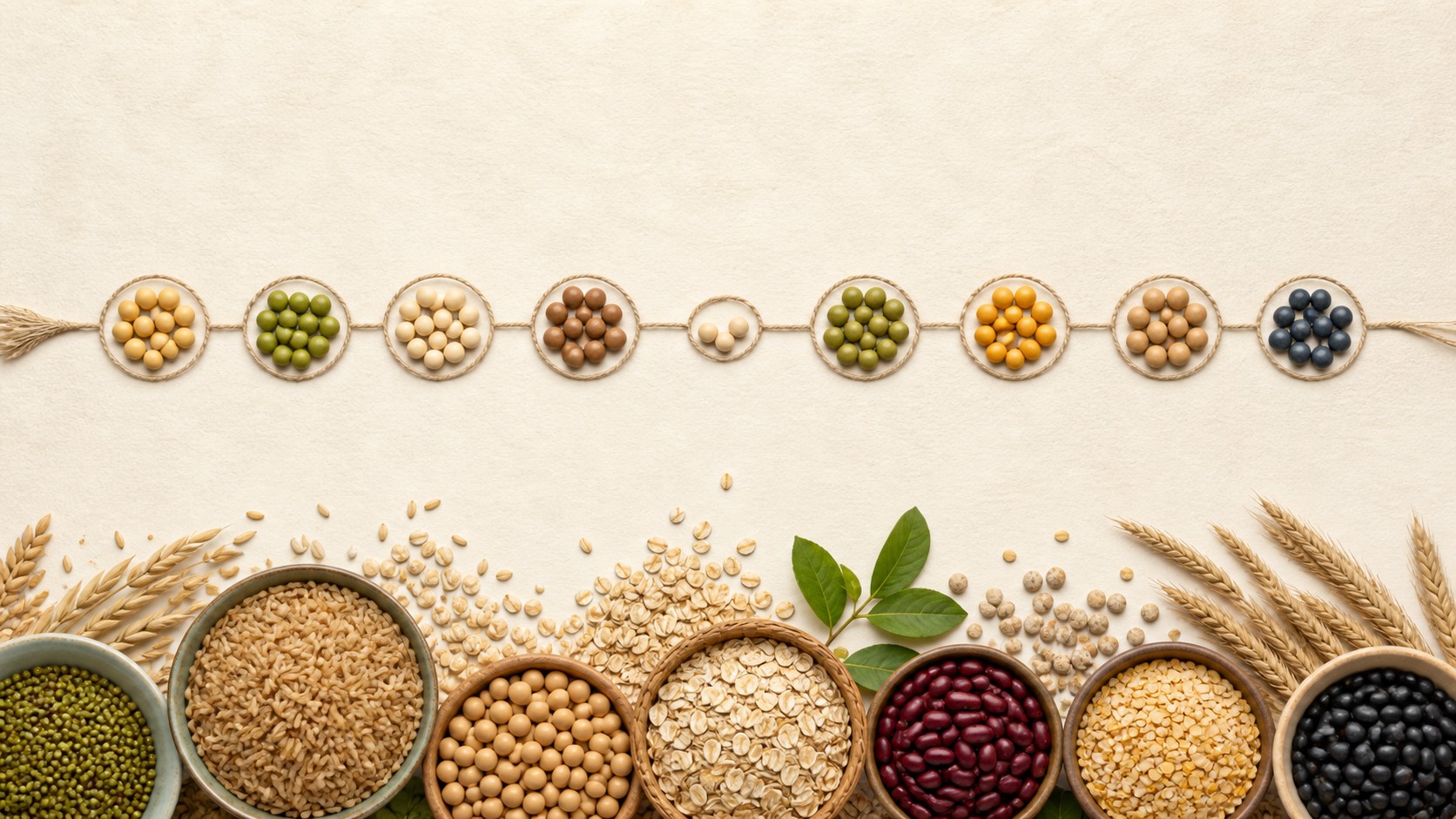
Protein has many building blocks; some may fall below the reference level
Protein is made of building blocks called amino acids. Those the body needs from food are called essential amino acids. When each is compared with a reference requirement, the one with the lowest proportion is the limiting amino acid. Picture a chart with one bar shorter than the others.
The shortest bar does not mean that amino acid is absent. It means its proportion is lowest relative to the requirements in the reference being used.
- The amino acid with the lowest value
- The reference amino acid requirements used for comparison
- Whether the amount is the total or has been adjusted for digestibility
- A single food, mixed foods or the whole day's diet
- Limiting means the lowest proportion, not undetectable.
References: PubMed Central · World Health Organization · PubMed Central · NCBI Bookshelf
One protein source contains many building blocks.
Dietary protein contains many amino acids. Essential amino acids must come from food because the body cannot make enough to meet its needs.
Assessment looks beyond the total protein amount. It checks how much of each essential amino acid is present compared with a defined reference requirement.
Saying an amount is low needs a comparison. Assessors therefore compare amino acid amounts with the reference defined for the group of people being studied.
- How much of each essential amino acid does the table show?
- Which age group’s requirements does the reference pattern represent?
- How does the amount of each amino acid compare with that reference?
- Which amino acid has the lowest relative amount?
- The amino acid identified as limiting must be read alongside the reference used.
Read What is protein? and distinguish the grams of protein in a food, the amount of each amino acid and the reference used to assess it.
References: NCBI Bookshelf · World Health Organization · PubMed Central · PubMed Central
Look at both the amount and digestibility
Composition data tells us how much of each amino acid a food contains. Digestibility data is used to adjust those amounts according to the assessment method. The two should be read together.
One protein-quality method, DIAAS, looks at each essential amino acid separately. It uses digestibility measured at the end of the small intestine, rather than applying one overall digestibility value to all the protein.
- Amino acid score: compares the amount of each amino acid with the reference
- PDCAAS: adjusts the score using overall protein digestibility assessed from faeces
- DIAAS: uses the digestibility of each amino acid at the end of the small intestine
- Read scores from different systems together with the method name.
The protein amount on a label is a total. To find which amino acid has the lowest proportion, we also need amounts for the individual amino acids and digestibility data matching the assessment method.
References: PubMed Central · PubMed Central · NCBI Bookshelf
The plant name tells you the source; a quality score needs test data too
A plant name or food group identifies the source, like a label on a box. Amino acid composition and digestibility must come from the tested sample.
Explore food sources further at Plant protein and animal protein then compare information from the actual sample
- Was the same type of ingredient tested as the one you are considering?
- Is it the same form of food, such as whole grain or protein isolate?
- Was it processed in the same way?
- Was the same analytical method used?
- Was it compared with the requirements of the same population group?
An ingredient name tells us only its source. A score requires composition data and a clearly specified assessment method.
References: PubMed Central · PubMed Central · NCBI Bookshelf
Different protein sources may complement one another
Information from NCBI explains that, in mixed foods, protein sources with different amino acid patterns may complement amounts that are lower in other sources. Assessment still needs the actual ingredients and their proportions.
- Each food in a mixture contributes part of its protein.
- The proportions determine how much each source contributes.
- Amino acid data should match the actual form of the food used.
- Digestibility data must match the scoring method.
- Both ingredients and their amounts are needed to calculate a score for the mixture.
Once you understand quality, read Should you consider protein per meal or per day? to plan protein amounts around the foods you eat.
References: NCBI Bookshelf · PubMed Central · PubMed Central
Use this knowledge to choose a variety of protein sources.
Labels state names and quantities, but scores require additional analysis. Read the basics at How to read Thai nutrition labels
- Check the method name to understand how the score was calculated.
- Check the amino acid reference to see whose requirements it represents.
- Check how digestibility is accounted for, rather than relying only on the amount present in the food.
- Check the tested sample to make sure it matches the food you are considering.
- Check whether the result applies to an ingredient, a single food or a mixture.
When choosing protein, consider amino acids, digestibility and a form that suits you. If you are interested in grain and soy protein in capsules, the Pro Cap product page provides its ingredients and test results.
References: PubMed Central · PubMed Central · NCBI Bookshelf · World Health Organization
Frequently asked questions
- Does a limiting amino acid mean that amino acid is absent?
- The amino acid may still be present. “Limiting” means the essential amino acid with the lowest proportion relative to the reference requirement used in the assessment, not that none was detected.
- Is the limiting amino acid the same in every table?
- Not necessarily. Tables may use different reference requirements, population groups, measurement methods or digestibility data. Always read the assessment method alongside the figures.
- Can total protein on the label identify the limiting amino acid?
- The total protein figure alone cannot tell us. We need measured amounts of each essential amino acid and the assessment method to identify which has the lowest proportion relative to the reference.