Health stories / Plant protein
Rice protein and soy protein: how do they differ, and which should you choose?
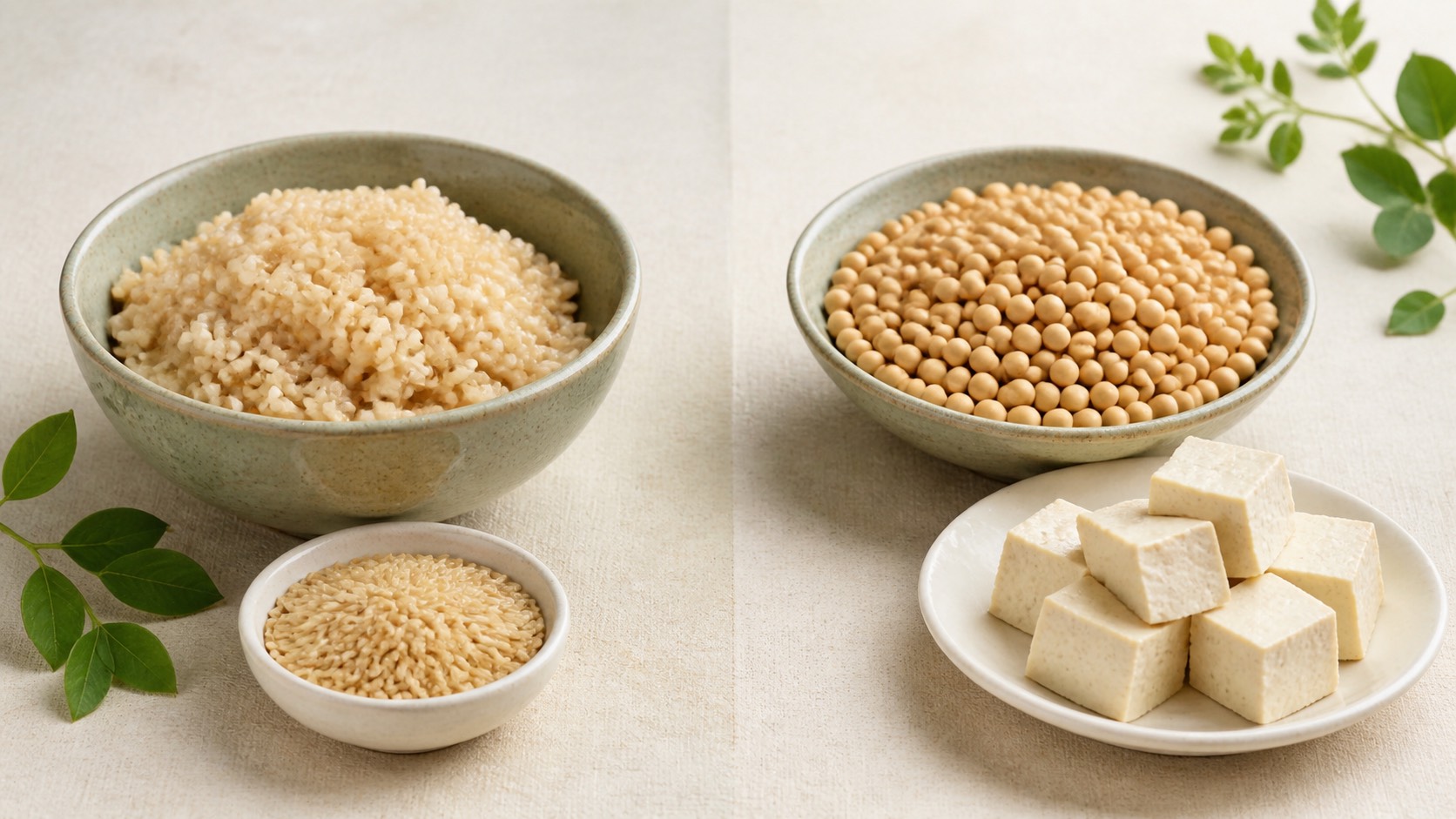
Two plant-derived choices for varied meals
Rice and soybeans are plant protein sources used in many forms. Rice belongs to the cereal group, while soybeans are legumes.
- Plant sources you want to eat
- A convenient food or product format
- The amount of protein per serving
- Essential amino acids—the protein building blocks we need from food—and how well they can be digested
Soybeans stand out for containing all essential amino acids. Rice is another grain-based source that broadens plant-based food and product choices.
Start with the meal you intend to use it with, then check quantity and format to choose what you actually need.
References: PubMed Central · World Health Organization
From familiar foods to formats you can choose
Rice comes as whole grains and flour, as well as ingredients processed to concentrate or isolate its protein. These ingredients therefore have different nutrient proportions from rice eaten as part of a meal.
Soybeans are used in foods such as tofu and soy drinks, as well as protein concentrate and isolate ingredients.
This variety offers choices for both meal ingredients and convenient ready-to-take products.
If you enjoy cooking, start with familiar dishes. If choosing a product, check whether its format suits when you plan to use it.
Different formats provide different nutrient proportions. Ingredient names and amounts per serving help you choose according to what you will actually consume.
References: PubMed Central · PubMed Central · PubMed Central
Choose according to the meal you intend to use it with
Rice and soy foods can be part of varied plant-based menus. Choose types and quantities that suit the meal.
To compare protein products, compare similar forms, such as concentrate with concentrate, to see differences useful for your decision.
- Decide whether you will use it as food or as an additional product.
- Choose a format that is convenient to prepare and take
- Check protein per serving.
- Compare with the amount planned for the meal.
- Choose an option you enjoy and can maintain
Use How to read Thai nutrition labels to compare amounts per serving in the products you are considering.
Knowing which meal you will use it with makes comparisons shorter and more focused, because you are choosing something that fits your everyday life.
References: PubMed Central · Thai FDA: ingredients on labels
Quantity tells you how much; quality tells you something different.
Protein quantity tells you how many grams you receive. Protein quality considers essential amino acids and digestibility against reference criteria. Both help with more complete meal planning.
If two products provide similar protein amounts, consider the actual serving size and convenience when choosing.
- How much protein does one serving provide?
- How do the products' serving sizes differ?
- Does the ingredient format match your intended use?
- Is amino acid and digestibility information available?
For product formats, read Protein capsules and protein powder to choose an approach that suits your goals
Choosing by the amount you need and directions you can follow gives a clearer basis than focusing on a single number.
References: World Health Organization · Thai FDA: ingredients on labels
Use quality scores to support your choice.
Amino acids are like parts used to build proteins. Different sources provide different proportions, so looking at the overall mix helps you understand protein quality.
Digestibility data indicate how well the amino acids present pass through digestion. They are another part of quality assessment.
PDCAAS and DIAAS are protein quality scoring methods that consider both amino acids and digestibility. To compare scores, use the same assessment method and check that the ingredient forms and study conditions are comparable.
- The same assessment method
- Comparable ingredient formats
- Digestibility data used in the calculation
- The age group used as the reference
- Check the conditions of the study that produced the score.
Experimental scores apply to the samples studied. When comparing them, match the ingredient and its form to the study.
In everyday life, start with foods you can eat, appropriate quantities and convenience. Use scores as supporting information when you want a more detailed comparison.
References: World Health Organization · PubMed Central · PubMed Central · PubMed Central
Choose a protein source in a convenient format
Rice and soybeans can play different roles in plant-based meals. Choose according to the foods you enjoy, the amount you need and when you plan to eat.
- Choose plant sources you can eat
- Decide which meal or time of day it will fit into.
- Check the amount per serving you actually take.
- Include protein quality information.
- Choose a convenient format you can maintain
Start with one practical choice, then alternate with other foods to bring variety to everyday meals.
Read What is protein, and how does the body use amino acids? to connect food sources with the body's basic functions
For grain and soy protein in capsules, visit the Pro Cap product page to explore ingredients, test results, directions and pack options.
References: PubMed Central · World Health Organization · Thai FDA: ingredients on labels
Frequently asked questions
- Rice or soy protein: which is more suitable?
- Choose by ingredient type and format, required quantity and convenience. To compare quality, use amino acid and digestibility data for that specific format.
- Is rice protein isolate the same as whole rice?
- These are different ingredient forms. Rice protein isolate undergoes separation and concentration, while whole rice retains other components. Use information that matches the form you are considering.
- What should I check when I see a protein quality score?
- For protein quality scores such as PDCAAS or DIAAS, check the assessment method, sample form, digestibility measure and reference age group. Scores are easier to compare when these conditions match.
References
- PubMed Central — Proteins from Legumes, Cereals, and Pseudo-Cereals
- World Health Organization — Protein and Amino Acid Requirements in Human Nutrition
- PubMed Central — Amino Acid Composition of Brown Rice Protein Compared with Published Soy Values
- PubMed Central — Protein Quality of Soy and the Effect of Processing
- Thai FDA Food Division — Requirements for declaring key ingredients
- PubMed Central — Determination of DIAAS for Plant Proteins and Skim Milk Powder